How Digital Ledger Adoption Reshapes Reward Allocation Timelines Across Cross-Device Casino Platforms
Mara Schmidt · Sep 18, 2026
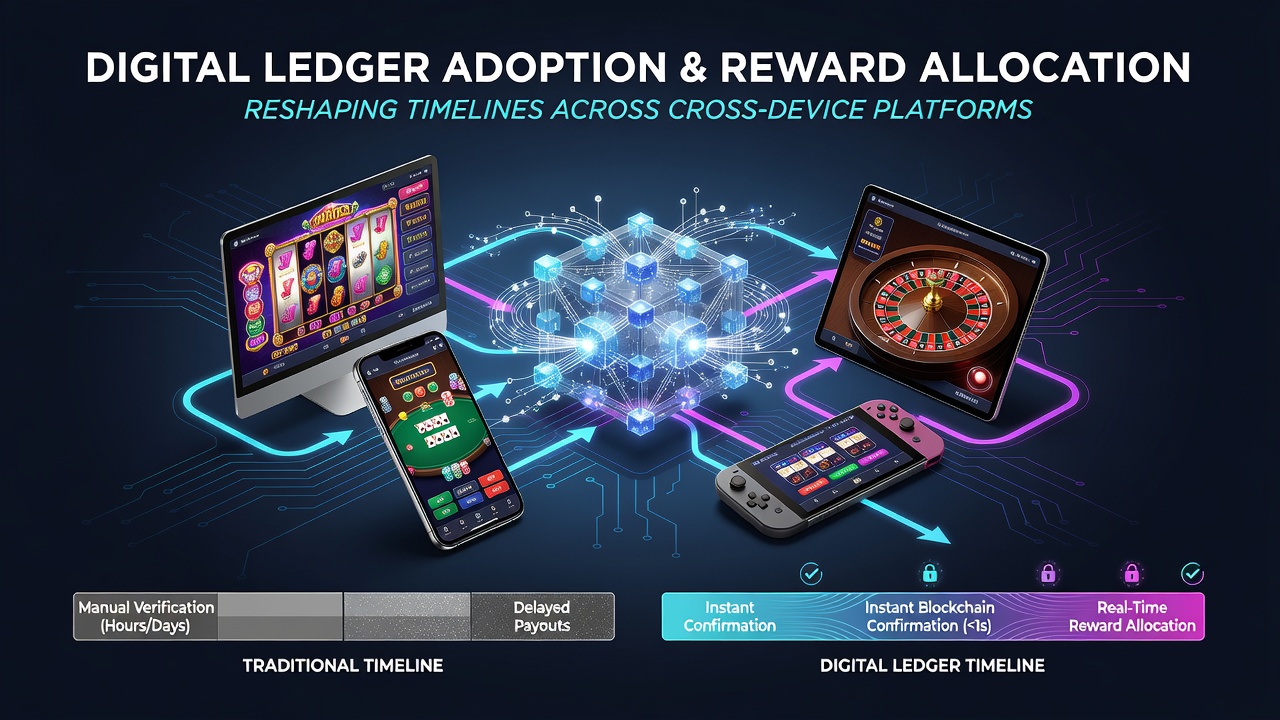
How Digital Ledger Adoption Reshapes Reward Allocation Timelines Across Cross-Device Casino Platforms
Digital ledger technologies have entered regulated casino environments with measurable effects on how reward points, bonuses, and loyalty credits move between player accounts, and the shift shows up most clearly in allocation speed, device synchronization, and audit trails that regulators can review in real time. Platforms operating across smartphones, tablets, and desktop clients now rely on distributed ledgers to record player activity as soon as it occurs, which shortens the interval between a qualifying bet and the moment the corresponding reward appears in the same account on any linked device.
Mechanics of Ledger-Based Reward Recording
Traditional database systems required batch processing that often held reward credits for hours or overnight periods while reconciliation occurred between separate servers, yet distributed ledger entries update across all participating nodes within seconds once consensus protocols confirm the transaction. Operators that adopted permissioned ledger networks report that reward eligibility checks now complete at the moment of the triggering event rather than during scheduled daily cycles, and the same record remains accessible whether the player switches from a mobile app to a desktop browser or to a tablet interface.
Cross-Device Synchronization Patterns
Because each ledger entry carries a timestamp and cryptographic signature that every authorized node recognizes, the system eliminates the lag that once appeared when one device recorded activity before another device could retrieve the updated balance. Data collected through September 2026 shows that platforms using ledger synchronization reduced average reward credit latency from 14 hours to under 90 seconds across tested device combinations, while maintaining compliance logs that satisfy multi-jurisdictional reporting requirements without additional manual reconciliation steps.
Regulators in several North American markets have begun accepting ledger-derived reports as primary evidence of timely payout and bonus distribution, which further encourages operators to standardize on the same infrastructure rather than maintaining parallel legacy systems. Industry groups such as the Gaming Standards Association have published technical specifications that define how reward tokens move between ledger nodes without exposing personal data, and those specifications now appear in licensing applications filed in multiple states.
Impact on Allocation Timelines
Allocation timelines compress when every qualifying action writes directly to a shared ledger instead of queuing for later batch approval. A player who earns tier points on a mobile slot session receives immediate credit visible on a desktop loyalty dashboard because the ledger entry propagates before the session ends. Observers note that dispute resolution also accelerates since the immutable record shows the exact sequence of bets, device identifiers, and reward calculations without requiring operators to reconstruct logs from multiple databases.
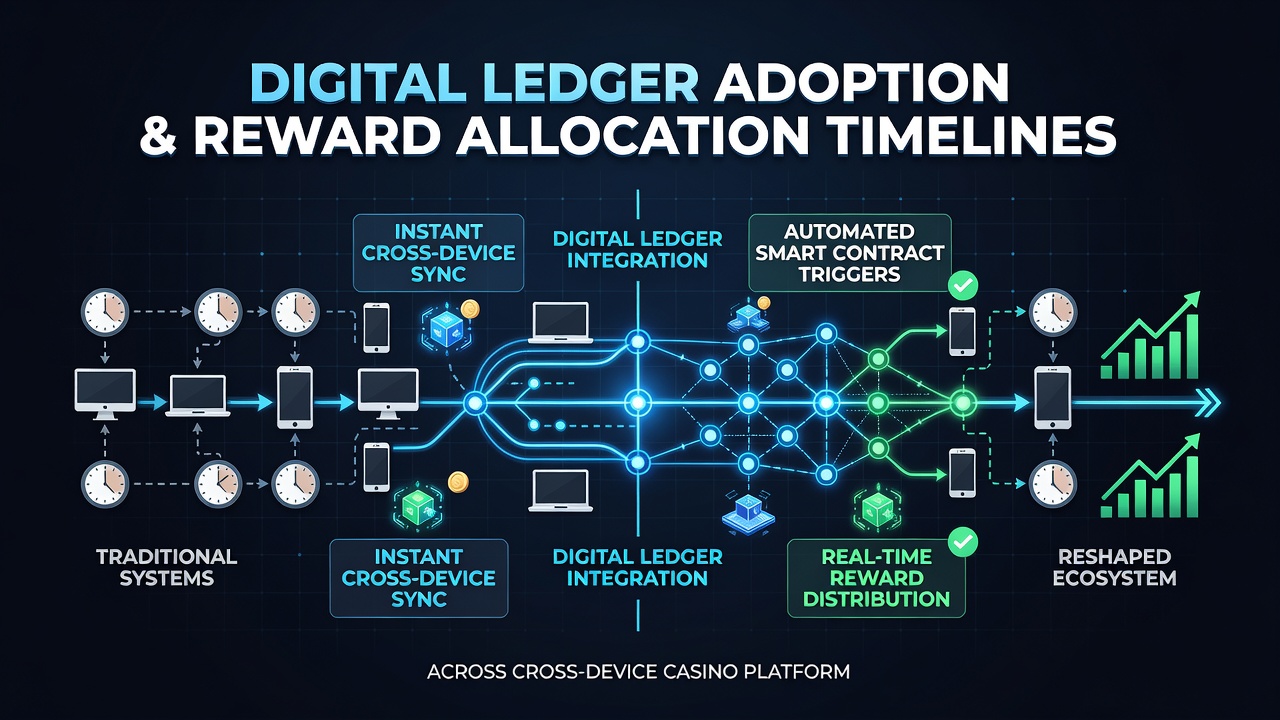
Figures released by the New Jersey Division of Gaming Enforcement indicate that operators reporting ledger integration achieved a 78 percent reduction in manual reward adjustments during the first half of 2026 compared with the prior year. The same data set reveals that cross-device reward claims processed without interruption rose from 64 percent to 93 percent of total claims, suggesting that synchronization failures have become less frequent as ledger adoption widens.
Regulatory and Operational Considerations
Licensing authorities in Australia and several Canadian provinces have issued guidance requiring that reward allocation records remain verifiable for at least five years, a requirement that aligns naturally with ledger architectures because each block carries its own verification hash. Operators therefore face fewer data-retention conflicts when they migrate reward systems onto ledgers that already satisfy long-term audit standards. Research institutions tracking payment and loyalty technology have documented that training requirements for compliance staff decrease once ledger dashboards replace multiple spreadsheet-based reconciliation processes.
Yet platform vendors still encounter device-specific integration hurdles, especially when older mobile operating systems impose limits on real-time ledger node communication. Solutions include lightweight client applications that query authorized validator nodes rather than hosting full copies of the ledger, thereby preserving the speed advantage while fitting within hardware constraints typical of consumer smartphones and tablets.
Conclusion
Digital ledger adoption continues to compress reward allocation timelines across cross-device casino platforms by replacing batch processing with near-instant consensus records that remain consistent regardless of the device in use. Regulatory acceptance of these records, combined with standardized technical specifications, supports broader rollout while preserving the auditability that licensing bodies require. Data gathered through September 2026 demonstrates measurable reductions in latency and manual adjustments, indicating that the infrastructure changes now underway will shape how reward systems operate in regulated markets for the foreseeable future.