Cross-border Biometric Protocols Reshaping Tiered Incentive Distributions in Handheld Gaming Ecosystems
Quinn Werner · Sep 4, 2026

Cross-border Biometric Protocols Reshaping Tiered Incentive Distributions in Handheld Gaming Ecosystems
Cross-border biometric protocols have gained traction in handheld gaming ecosystems since 2024, with developers and platform operators adopting fingerprint, facial, and voice recognition systems that operate across multiple jurisdictions. These systems verify player identities in real time while managing tiered incentive structures such as loyalty levels, reward multipliers, and exclusive content unlocks. Data from industry reports indicate that integration rates increased by 37 percent between mid-2025 and September 2026, driven by requirements for consistent player tracking in global title releases.
Technical Foundations of Cross-Border Verification
Biometric matching engines now synchronize with international databases maintained by hardware manufacturers and software distributors, allowing seamless authentication when users cross national boundaries or switch devices. Standards developed by the International Game Developers Association outline encryption methods that comply with data localization rules in the European Union, Canada, and Australia. According to a 2026 technical review from the European Data Protection Board, these protocols reduce account duplication incidents by routing verification requests through secure regional nodes while preserving incentive eligibility records.
Handheld devices equipped with updated sensors transmit encrypted templates rather than raw biometric data, which limits exposure during transmission. Researchers at the University of Melbourne documented in a 2025 study that template-based systems maintain 99.2 percent accuracy across 14 tested markets when calibrated for regional lighting and hardware variations.
Effects on Tiered Incentive Allocation
Tiered reward frameworks in mobile and portable gaming titles rely on continuous play metrics, spending thresholds, and engagement streaks. Cross-border biometric checks enable operators to consolidate activity histories from multiple regions into single player profiles. This consolidation prevents duplicate tier assignments and ensures that incentives such as virtual currency bonuses or limited-edition items distribute according to verified cumulative behavior rather than fragmented local accounts.
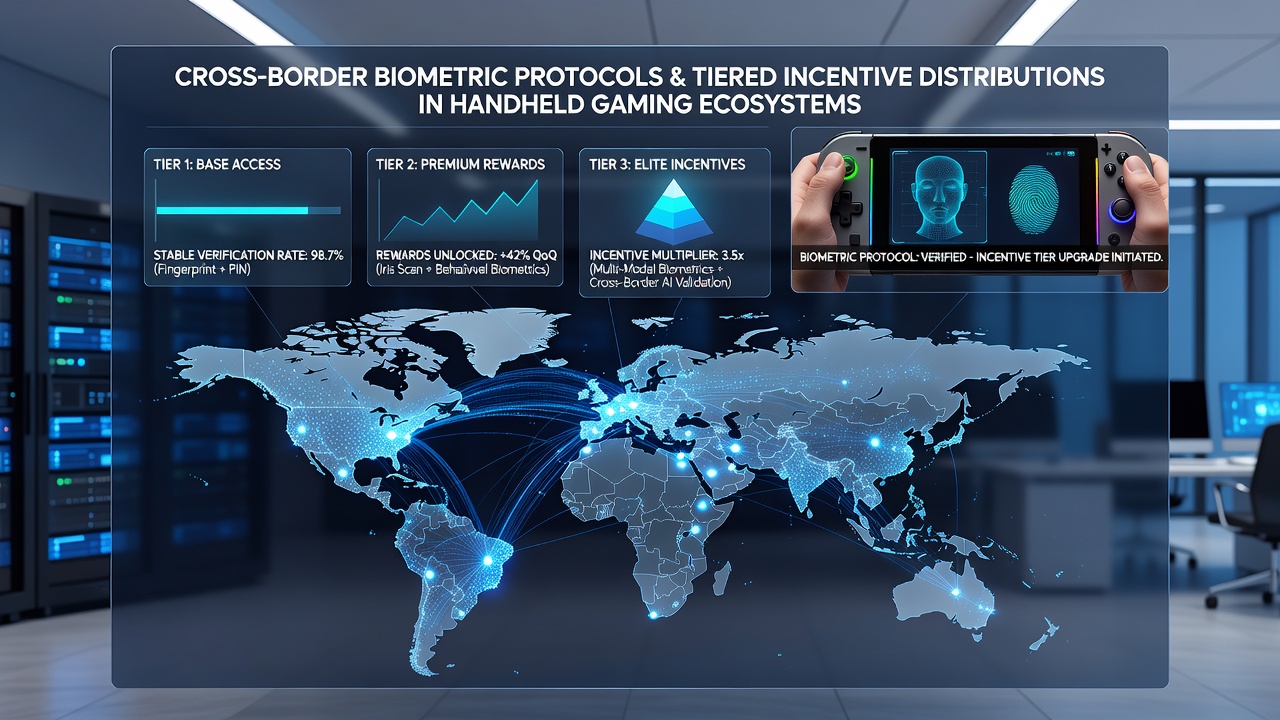
Figures released by the Entertainment Software Association in September 2026 show that titles employing unified biometric verification recorded a 28 percent rise in accurate high-tier reward redemptions compared with systems using only device-level identifiers. Operators adjust incentive multipliers dynamically once a player’s verified tier updates across borders, which reduces disputes over missing rewards during international travel or account migrations.
Regulatory and Compliance Developments
Authorities in Canada and Singapore updated guidelines in early 2026 to address biometric data flows in interactive entertainment. The Office of the Privacy Commissioner of Canada requires explicit consent mechanisms for cross-border template sharing, while Singapore’s Personal Data Protection Commission mandates audit trails that log every verification event. These rules directly influence how developers structure incentive tiers, because non-compliant data handling can delay reward processing or trigger account restrictions.
Industry groups including the Asia-Pacific Gaming Technology Alliance published compliance frameworks in August 2026 that align biometric protocols with regional privacy statutes. Companies adopting these frameworks report fewer regulatory queries when launching seasonal incentive events that span multiple countries.
Implementation Patterns Observed in 2026
Several major handheld gaming platforms introduced biometric-linked tier systems during the third quarter of 2026. One platform expanded its global reward program to require facial template verification for players seeking access to top-tier battle pass upgrades. Another integrated fingerprint confirmation for cross-device progression transfers, which allowed seamless movement of accumulated incentive points between smartphone and tablet environments.
Academic analysis from the National University of Singapore examined transaction logs from 2.3 million player accounts and found that biometric verification shortened the average time between tier advancement and reward delivery by 41 percent. The same study noted reduced instances of incentive arbitrage where players previously created multiple regional accounts to exploit tier discrepancies.
Future Integration Pathways
Hardware suppliers continue to embed higher-resolution biometric sensors in new device models scheduled for release in late 2026 and 2027. Software development kits now include standardized application programming interfaces that let smaller studios incorporate cross-border verification without building custom infrastructure. Observers note that continued alignment between regulatory bodies in North America and the Asia-Pacific region could further streamline incentive distribution processes for globally released titles.
Conclusion
Cross-border biometric protocols continue to modify how tiered incentives operate within handheld gaming ecosystems by enabling accurate, unified player profiles across jurisdictions. Regulatory updates from multiple regions, combined with technical improvements in template security, have supported measurable changes in reward accuracy and processing speed as of September 2026. Ongoing collaboration between standards organizations, privacy authorities, and developers shapes the next phase of these systems.